Brand guidelines
The designed PDF that tells every printer, developer and new hire exactly how the brand is used, so it stops drifting.

Most brands are assembled backwards, a logo from one supplier, a colour palette invented by the next, a website that quietly redraws both. This is the same work commissioned once, in sequence, from one set of files.
Brand identity design is the work of building the whole visual system a business is recognised by, the mark, the colour, the typography and the rules that govern how all three behave, so that a business card, an invoice, a shopfront and a website look like they came from the same company. The logo is the layer everyone can name. It is also the layer that fails first when the other three were never specified.
The failure is predictable and we see it constantly. A logo gets commissioned on its own, because that is the piece a founder knows how to ask for. Six months later a website is built, and the developer picks colours off a screenshot, so the brand blue is now three slightly different blues across print, web and social. A year after that a printer asks for Pantone values nobody has. Each individual decision was reasonable; the compound result is a brand that looks assembled rather than designed, and fixing it costs more than specifying it would have.
Buying the layers together is not upselling, and it is cheaper than buying them in sequence for a reason that has nothing to do with a discount: the discovery is paid for once. The brief that produces a good logo is the same brief that decides the type scale and the site structure. Commissioned separately, you pay three suppliers to learn about your business three times, and they reach three different conclusions. What to spend on branding at each stage works through the numbers honestly, including when a logo on its own genuinely is the right call.
What you receive
Everything below is built from a single brief and a single set of vector originals, which is what stops the pieces drifting apart. The signed copyright transfer covers all of it, not just the logo.
The line that matters most in that list is the last one. A great many studios assign copyright on the logo and stay quiet about the guidelines document, the website design and the layout files, which means the artefacts you would need in order to move to another supplier are the ones you do not own. Who actually owns your logo explains why paying an invoice does not transfer copyright by default, and why the document is the thing to ask for rather than the reassurance.
Start a brand identity project
The system
Each layer constrains the next, which is why building them out of sequence is what produces the mismatched brands described above. A palette chosen before the mark exists will fight the mark. A website designed before the type scale is set will invent one.
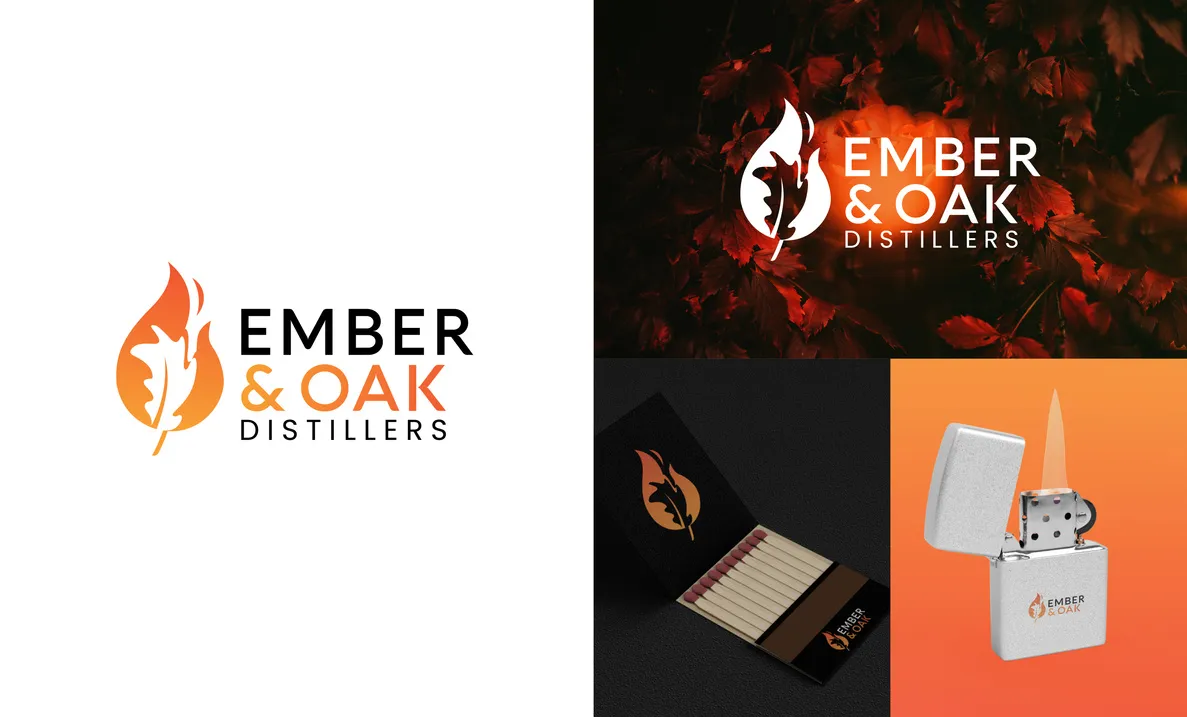
The logo system: primary, secondary and stacked lockups, a one-colour version and the small-size behaviour. Everything downstream inherits its proportions and its clear-space. Built exactly as described on the logo design page. This page does not repeat that work, it sequences it.
A palette specified in HEX, RGB, CMYK and Pantone so print and screen agree, plus a type scale with real pairing rules. This is the layer most often skipped, and it is the one that causes the three-different-blues problem. Specified once here, it binds every later supplier.
The guidelines document that makes layers 01 and 02 enforceable by someone who has never spoken to us, a printer, a developer, a new marketing hire. Full detail on the brand guidelines page. Without it the system exists only in the files, which is to say it does not exist.
Desktop, tablet and mobile layouts drawn from the system rather than approximating it, handed to a developer as a component library. The website design page covers the handoff in detail. This is where a brand either holds together or visibly stops.
How it runs
The gating is the point. Nothing downstream starts until the layer above it is signed off, because reopening layer 01 after layer 04 is built is the expensive mistake this sequence exists to prevent.
A single discovery covering what you sell, who you compete with, and every surface the brand has to appear on: print, screen, physical, small. Done once rather than three times by three suppliers. The brief template is the same list, free to use anywhere.
Concepts, revisions and internal QA on the logo alone, until it is settled. Nothing else is drawn until it is, because every proportion downstream is derived from it. This stage runs exactly as the logo design page describes.
The palette is built to work with the finished mark rather than alongside a placeholder, and tested in print and screen conditions. The type scale is set here and it is the scale the website will use, not a similar one chosen later by someone else.
Guidelines are documented from the real system rather than drafted in parallel, so the document cannot describe a version of the brand that was superseded during revisions. That is a genuine failure mode of buying guidelines as a separate project.
Website layouts built from the specified palette, scale and lockups, handed over as a component library with handoff notes. If the guidelines and the site design disagree, one of them is wrong and we fix it before handover rather than after.
Fit
A business with no visual system at all, one that has outgrown a mark made quickly at the start, or one where the pieces have drifted so far apart that patching them costs more than rebuilding. Also the right call if a website is already scheduled, designing the site from a finished system is materially cheaper than retrofitting a brand onto a built site. Rebrand or refresh is the diagnostic for which one you need.
If you have a logo you are happy with and usable vector files, buy the layer you are missing rather than the bundle, guidelines or a site design on their own. And if the business is still deciding what it sells, an identity built now will be rebuilt in six months. Say so in the brief and we will tell you to wait; we would rather quote the right thing than the bigger thing.
Scope
Stated up front, because "full brand identity" is a phrase that means whatever the seller wants it to mean, and the gap between what you assumed and what arrives is where the arguments happen.
We design the visual system for the brand you bring. Choosing the name, defining the market position and writing what the brand says are three separate disciplines with their own deliverables. We will flag early if a name is going to be hard to draw or easy to confuse. That is advice, not the service.
You receive the site design and a component library built for handoff, not a built and deployed website. This is stated plainly rather than blurred, because "website design" is routinely sold in a way that leaves the buyer expecting a live site. The website design page sets out exactly where the line falls and what a developer receives.
We design a mark you can register and screen it against the competitors you name, but filing is a legal step you or an attorney take. If you are trading in Texas specifically, the state and federal registers are separate systems on separate renewal cycles, the Texas page explains what each one does and does not cover, and branding a new Texas LLC sets out where that step falls in the sequence.
Questions
The logo system, the colour palette in all four colour spaces, the type scale and pairing rules, the guidelines document, and the website design built from those. Plus every vector source and export format, and a signed copyright transfer covering all of it. The list is on this page rather than behind a form because "full branding package" is a phrase with no fixed meaning, and the only way to compare two quotes is to compare two lists.
Ours are $90, $175 and $295, published rather than quoted, and the difference between tiers is how many genuinely distinct directions get designed, not what you walk away holding. Across the wider market a full identity runs from roughly $2,000 to $15,000 at agency level, and there are $50 versions that are a logo generator with a PDF stapled to it. What decides value is whether the layers were built as one system and whether the copyright actually transferred.
A logo is a mark. An identity is the mark plus the colour, the typography, the rules and the applications, the whole system a business is recognised by. Buying only a logo is a legitimate choice and often the right one early on; the problem is buying only a logo while believing you bought an identity, and discovering the gap when a printer asks for Pantone values or a developer asks for a type scale.
Yes, and plenty of clients do. It costs more in total than the bundle because discovery gets paid for again each time, and it carries the drift risk this page is largely about, but it is a real option and we will not pretend otherwise. If budget is the constraint, the honest sequence is logo first, then guidelines, then the site.
Before, always. A website designed against a finished system is a layout job; a brand retrofitted onto a built site is a compromise negotiated against decisions a developer already made. If the site is already under construction, tell us at brief stage. That changes what we recommend, and occasionally it changes it to "wait".
You do, in writing, across every layer: mark, guidelines, layout files and source. Not a licence, no category restriction, no expiry. This matters more on a bundle than on a single logo, because a partial assignment leaves you owning the mark but not the documents you would need to take it elsewhere.
First draft of the mark within 24–36 hours of a complete brief. The full system runs longer because the stages are gated, colour waits on the mark, guidelines wait on colour, the site waits on guidelines. Most projects land in a few weeks; what extends it is decisions still being made during design rather than design time itself. Average reply time across 2,604 projects on Fiverr is about an hour.
No. Every mark is drawn. That is a craft position and also a commercial one, authorship is what makes a mark protectable, and a generated logo has a genuine ownership problem underneath it. <a href="/blog/ai-logo-generators-limits/">What AI logo generators are actually good for</a> covers where the line falls.
Send what you have: a name, a rough idea, or an existing brand that has drifted, and say whether a website is in scope. You get questions, a sequence and a quote back. Average reply time about an hour, no charge for the conversation.
Start your project